Modern vehicle cabins are undergoing a dramatic transformation, with manufacturers embracing sleek, minimalist designs that center around integrated touchscreen interfaces. This shift toward digital cockpits promises enhanced functionality and customization, allowing drivers to control everything from climate settings to navigation through a single, intuitive interface.
While these streamlined interiors offer an undeniably modern aesthetic and unprecedented flexibility in feature updates, they also present new challenges that the automotive industry must carefully address.
The fundamental problem with touchscreens in vehicles mirrors an issue we have lived with since the introduction of the iPhone: they demand visual attention. Every interaction requires drivers to take their eyes off the road to locate and accurately touch specific areas of the screen. This visual dependency creates a dangerous contradiction—our most critical sensory input for safe driving is being diverted to interface operation.
Touch-free gesture control presents a promising solution to this challenge. When properly implemented, gestures allow drivers to execute commands without visual confirmation. Imagine confirming an incoming call with a simple thumbs-up or setting your navigation home with a quick “V” sign, all while maintaining focus on the road. These interactions can serve as invaluable shortcuts, eliminating the need to navigate through multiple menu layers on a touchscreen.
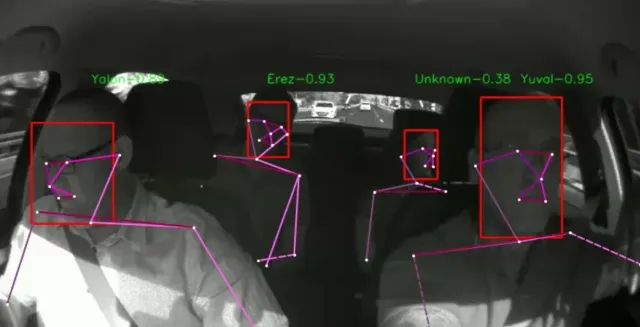
Gesture recognition tech in action. (Source: Cipia)
However, the path to implementing effective gesture control systems is far more complex than it might appear. As someone who has worked extensively with gesture recognition technology in both consumer electronics and automotive applications, I have witnessed firsthand the technical and human factor challenges that must be overcome.
But the greater challenge may be cultural rather than technical. Our research has found that even seemingly “universal” gestures vary significantly across cultures and individuals. In one study we conducted, participants were asked to demonstrate gestures for common actions like volume control. The variations were striking—some mimicked turning a large knob and others a small dial, while some created vertical sliding motions or even used completely different conceptual approaches.
Consider the simple thumbs-up gesture; while we all agree that raising your thumb signifies approval, there are limitless variations to this simple gesture. Even within the same culture, there was no true consensus on what constituted the “natural” gesture for basic commands.
This variability extends beyond casual gestures. Even formal sign languages, which one might expect to provide standardized solutions, vary significantly between regions—American Sign Language differs markedly from its counterparts in other English-speaking countries, let alone other nations.
The solution to these challenges requires a two-pronged approach. First, we need to develop intelligent training systems that can effectively teach users specific gesture sets through interactive tutorials. These systems must provide clear feedback and ensure user comprehension before activation.
Second, and perhaps more critically, we need to address a fundamental organizational issue within the automotive industry. Currently, the development of in-cabin technology is often fragmented across different departments—ADAS, in-vehicle infotainment, user experience, and others—each working in relative isolation. This siloed approach is particularly problematic for gesture control systems, where success depends on seamless integration of hardware, software and user experience design.
The path forward requires bringing Tier-2 suppliers into the development process earlier, allowing their expertise in both technical capabilities and human factors to inform system design from the ground up. Only through this collaborative approach can we create gesture control systems that are both technically robust and intuitively usable.
As we continue to advance vehicle interface design, we must remember that the goal is not simply to implement new technology, but to enhance both the driving experience and safety. Touch-free gesture control holds immense promise but realizing that promise requires us to address both the technical challenges of reliable recognition and the human factors of intuitive interaction. Success will come not from perfect technology, but from technology that perfectly aligns with human behavior and needs.
News source: eetimes.com